he World Baseball Classic, widely known as the WBC, has become more than a tournament squeezed into the early weeks of the baseball calendar. It is now one of the sport’s clearest demonstrations of national identity, emotional investment and international growth. When Japan defeated the United States in the 2023 final, the image of Shohei Ohtani striking out Mike Trout in Miami traveled far beyond baseball media. It reached casual fans。sports bars and social platforms that rarely discuss international competition. The WBC created a stage where elite players were not wearing club uniforms, and that small change carried enormous weight. A routine regular-season matchup can be memorable;
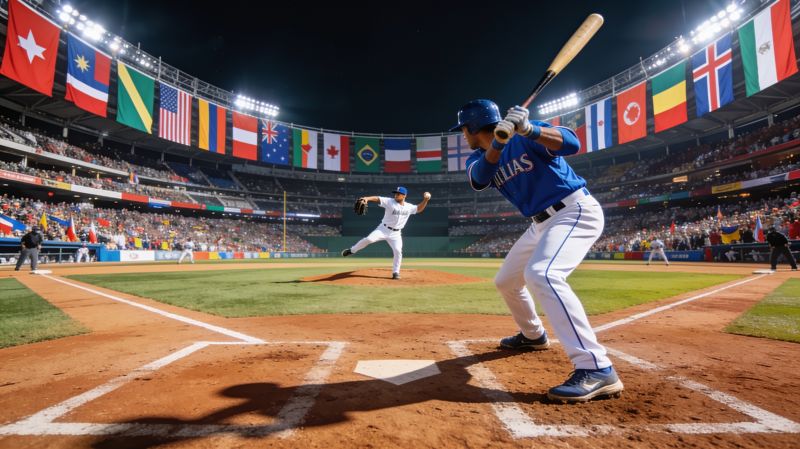
a WBC game can feel like a national event.The tournament’s power comes from its unusual mixture of established stars and unfamiliar storylines. Japan arrived with a disciplined pitching staff and a lineup built around contact, speed and preparation。while the United States relied on a collection of Major League Baseball’s most recognizable hitters. Mexico pushed into the semifinals after defeating Puerto Rico in a tense quarterfinal, and Colombia, the Netherlands and the Czech Republic brought different baseball cultures into the same conversation. The WBC rewards teams that adapt quickly because players who normally compete as rivals must learn one another’s habits in a matter of days. A catcher may be working with a pitcher he has never met, and a manager must balance national pride against strict limits on player workload.That tension has always been part of the WBC’s appeal. Clubs and agents worry about injuries before the regular season begins, while players often describe the tournament as a chance they cannot reproduce in professional baseball. Puerto Rican players have spoken about the energy of packed stadiums and flags hanging from every railing. Dominican stars treat the event with the intensity of a playoff series, even though their teams may be eliminated after one bad night. The WBC exposes a difference between baseball as employment and baseball as representation. A player can earn millions from a club, but the pressure of wearing his country’s name across his chest is personal in a way that contract numbers cannot explain.For Major League Baseball, the WBC also serves as a global showcase with unusually high emotional stakes. The tournament gives emerging baseball markets a reason to watch, not merely consume highlights of American teams. In the 2023 WBC。attendance and television interest surged in Japan, while games in Taiwan and the United States generated loud, distinctive atmospheres. The competition has helped normalize the idea that the sport’s best players should be visible outside their domestic league. It has also sharpened questions about scheduling, insurance, roster rules and player safety. Those concerns are legitimate, but canceling the event or reducing it to a promotional exhibition would miss its central value. The WBC works because players care enough to take risks, and fans can see that commitment immediately.The next editions will face a difficult balancing act: preserve the tournament’s urgency without allowing commercial demands or club concerns to flatten its character. More countries are developing competitive programs, and the gap between traditional powers and ambitious newcomers is no longer fixed. A well-organized WBC can give young players a national platform, attract investment in local baseball and create rivalries that last beyond a single competition. Its strongest moments are not always the technically perfect ones. They are the dugout celebrations。the flags draped over exhausted players and the sudden silence before a ninth-inning pitch. The WBC has found a rare space in modern sport, where global ambition and individual emotion meet without needing translation.